

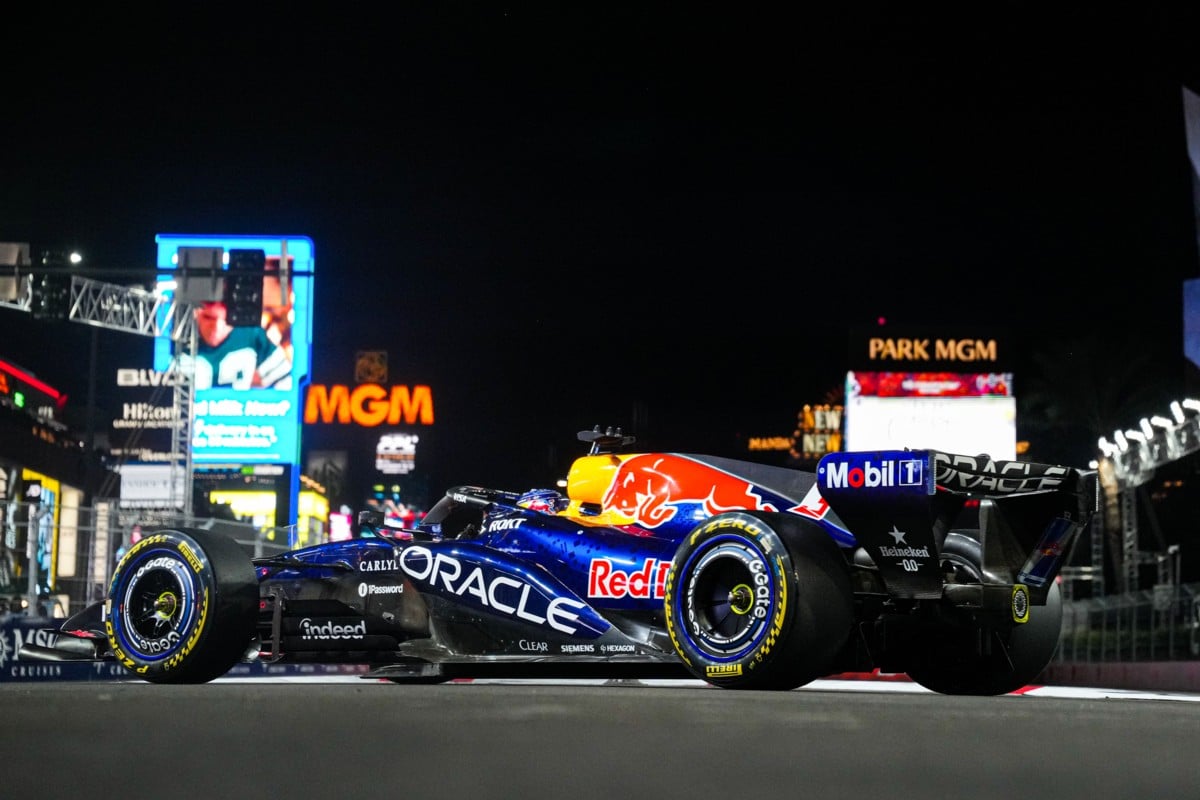
The 2026 Las Vegas Grand Prix delivered approximately $800 million in economic impact for Las Vegas and the surrounding region, according to Las Vegas Convention and Visitors Authority (LVCVA) President Steve Hill, marking a roughly $100 million decrease from the prior year's performance.
This declining trajectory reflects a broader pattern since the event's inception. The inaugural 2023 race generated an estimated $1.5 billion in economic impact, followed by $934 million in 2024, suggesting a stabilization around the $800-900 million range as the event matures. Neither the LVCVA nor Formula 1 has officially disclosed a standalone 2025 figure, disclosing instead only a combined $3.2 billion across the three-year period.
Hill attributed the year-over-year decline solely to improving operational efficiency. The economic-impact calculation includes F1's direct spending to stage the race, which has decreased substantially as the organization refined its processes. The inaugural event required major capital investments including a 300,000-square-foot pit building near Harmon Avenue and a full repaving of the 3.8-mile circuit to Formula 1 specifications. These one-time infrastructure outlays inflated that first year's economic contribution.
Operational timelines have compressed dramatically. Construction that initially stretched nine months has been reduced to approximately 11 weeks of installation and five weeks of dismantling, according to Grand Prix CEO Emily Prazer. F1 is investing further in permanent infrastructure upgrades including underground utilities, a permanent podium at Grand Prix Plaza, fixed power connections, and enhanced lighting infrastructure along the circuit, designed to shorten setup and teardown windows even further.
Despite the economic-impact decline, casino operators report strength in event-related revenues. MGM Resorts International CEO Bill Hornbuckle told media that his company benefited from operational lessons learned in earlier races. He highlighted the first-ever sellout of the Bellagio Fountain Club, a luxury hospitality venue overlooking the resort's fountains. MGM, which operates nine casino resorts on the Strip, committed to hosting the hospitality experience through at least 2034 and indicated enthusiasm for events attracting approximately 250,000 visitors annually to Las Vegas.
The race week calendar has evolved significantly. Rather than remaining clear for F1 assessment purposes, 2026 saw competing entertainment including Mandalay Bay's hosting of the Players Era men's college basketball tournament and Vegas Golden Knights games at T-Mobile Arena. Hornbuckle expressed interest in developing the period into a full-fledged sports festival, potentially anchored by Raiders home games as occurred in 2024 and 2025.
Official tax revenue figures for 2026 remain unavailable pending 2027 reporting. However, the 2025 event generated $43 million in state and local tax revenue, including nearly $15 million designated for education programs. The economic-impact methodology employed by LVCVA and other destination marketing organizations typically captures both direct operator spending and induced visitor expenditures across hospitality, gaming, and entertainment sectors. As F1 continues optimizing the event's operational footprint, economic-impact figures may continue adjusting downward while visitor volume and casino revenue benefits potentially remain robust.
Source
Casino.orgRelated stories

Rush Street Interactive Stock Faces Headwinds From Colombia Taxes, North American iGaming Softness
Prediction Markets Explode With Absurdist Wagers From Turkey Gobbles to Afghanistan's Misery
Encore Boston Harbor Revenue Drops 12% in October as 63-Day Strike Winds Down
Unclaimed $847M New Jersey Powerball Jackpot Highlights Lottery Claims Process
More on CasinoAdvisor