

Prediction markets have emerged as a parallel universe of financial speculation, where traders wager on outcomes ranging from the mundane to the dystopian. This week's quirky markets reveal both the flexibility and the ethical ambiguities embedded in platforms designed to monetize uncertainty about real-world events.
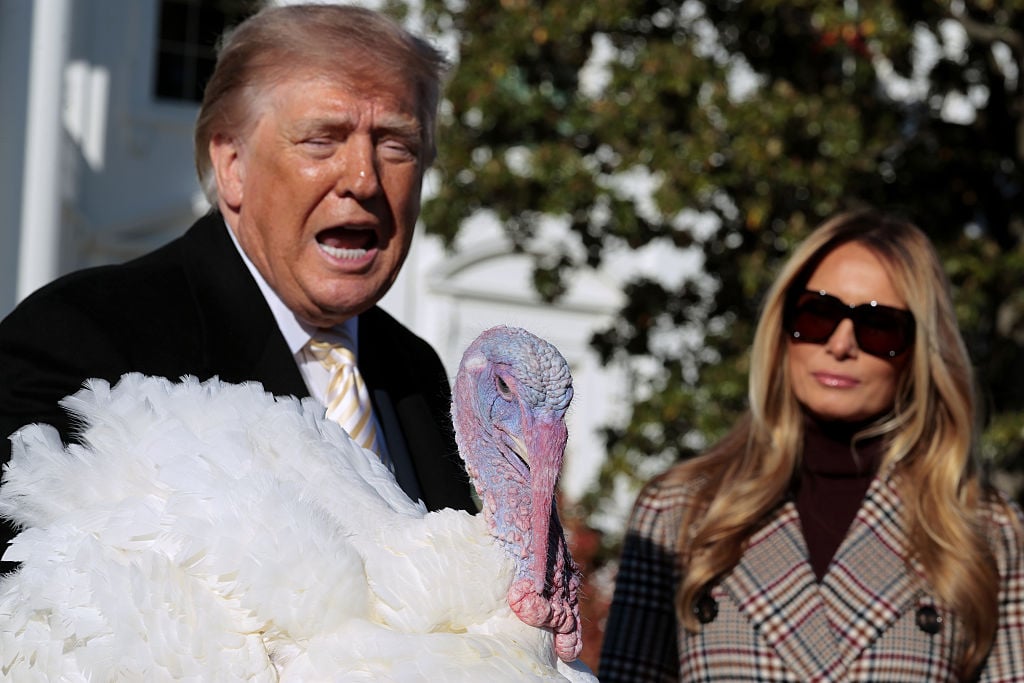
The most lighthearted example involved nearly $73,000 traded on Polymarket regarding whether a turkey would audibly gobble during Trump's Thanksgiving pardon ceremony. Despite the high stakes and resolution criteria requiring verified audible confirmation from footage, the market has been disputed twice and remains unresolved, highlighting practical challenges in predicting and verifying seemingly simple events. Related markets on the ceremony itself rewarded traders who correctly guessed Trump would mention his new White House ballroom project.
More sobering is the emergence of markets that essentially commodify human suffering. The 2027 World Happiness Report market allows traders to profit from Afghanistan's anticipated placement as the world's unhappiest nation, with the country commanding 84% odds. Sierra Leone follows at 13%. Nearly $11,000 has traded on this proposition. The World Happiness Report itself, an annual UN-supported study measuring life satisfaction, has consistently ranked Afghanistan last while Finland tops the index since 2018. This market exemplifies a growing tension in prediction platforms: while they theoretically aggregate distributed knowledge, they simultaneously create financial incentives to bet against human wellbeing.
In the intellectual sphere, prediction markets are reshaping how the world approaches unsolved problems. Following mathematician Levent Alpöge's announcement that he may have cracked the Riemann Hypothesis using Anthropic's Claude AI, Polymarket traders have elevated the Riemann Hypothesis to 77% odds of being the next Millennium Prize Problem solved by artificial intelligence. Nearly $1 million has traded on this market. The original conjecture, proposed by Bernhard Riemann in 1859 concerning prime number distribution, carries a $1 million prize from the Clay Mathematics Institute. The smart money's confidence in AI reflects genuine technical progress, though the mathematical establishment has not yet formally recognized Alpöge's proposed solution.
Other markets this week ranged from diplomatic theater (a 30% probability that Trump and Xi Jinping will embrace before January 2028, with $4,000 wagered) to luxury goods speculation (a Christie's auction outcome for a rare 1990 Burgundy wine). A conspiracy-adjacent market on whether deceased financier Jeffrey Epstein will be identified as Bitcoin creator Satoshi Nakamoto before year-end has generated $51,000 in volume despite assigning the theory only 1% probability.
These markets collectively demonstrate prediction platforms' evolution into entertainment-meets-speculation venues with minimal industry guardrails. The resolution disputes on the turkey market alone underscore the operational challenges platforms face. For the gambling and iGaming sectors, prediction markets represent both competitive pressure and regulatory uncertainty as they occupy an increasingly mainstream position in financial markets without consistent international oversight.
Source
Casino.orgRelated stories

Encore Boston Harbor Revenue Drops 12% in October as 63-Day Strike Winds Down

Unclaimed $847M New Jersey Powerball Jackpot Highlights Lottery Claims Process

Sky River Casino Reports Four Major Jackpot Winners Totaling $540,000

Arizona sports betting handle slips 1.7% in September as mobile dominates market
More on CasinoAdvisor