

Based on reporting by Casino.org →
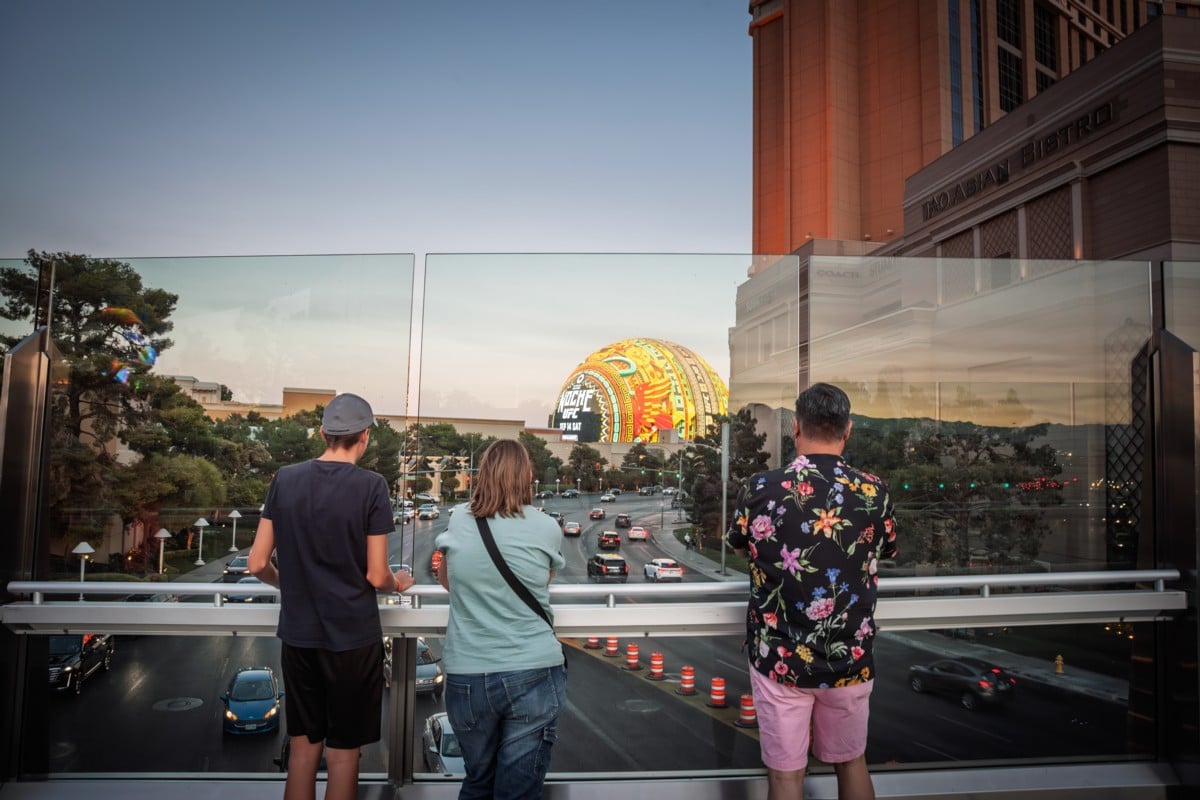
In a significant ruling for local gaming and hospitality operators, U.S. District Judge Jennifer Dorsey upheld Clark County's ordinance prohibiting stopping, standing, or congregating on pedestrian bridges along the Las Vegas Strip. The decision, issued on September 25, 2026, marks a legal victory for local authorities attempting to manage foot traffic in one of the world's most congested tourist corridors.
The ordinance, passed by the Clark County Commission in January 2024, classifies violations as misdemeanors punishable by up to six months in jail and/or $1,000 in fines. The rule applies to all elevated pedestrian bridges crossing over or near Las Vegas Boulevard, a critical infrastructure component serving the dense concentration of casino resorts, entertainment venues, and attractions that define the Strip experience.
Clark County Counsel Lisa Logsdon justified the measure by comparing pedestrian bridge design standards to flow management protocols in other major cities, specifically citing New York City. The county emphasized that bridges were engineered as transit corridors to safely move thousands of people daily, not as gathering spaces. However, the ordinance quickly earned the colloquial nickname "Strip Selfie Ban" due to widespread confusion about whether tourists could pause for photographs. Both county officials and the Las Vegas Metropolitan Police Department stated they would not target casual photographers, though the ordinance's language does not explicitly exempt such activity.
The American Civil Liberties Union of Nevada challenged the ordinance in February 2024 on behalf of two plaintiffs: Brandon Summers, a street violinist performing on the Strip since 2009, and Lisa McAllister, a wheelchair user who argued the ban could criminalize her need to pause while crossing bridges. The ACLU characterized the rule as "the most extreme regulation brought forward in years," contending it criminalizes ordinary pedestrian behavior while granting law enforcement excessive discretionary enforcement power. The organization raised concerns about vagueness, selective enforcement potential, and violations of First Amendment protections for street performance and political expression.
Judge Dorsey acknowledged the ordinance's restrictive nature but found it constitutionally permissible. She emphasized the legitimate government interest in managing unpredictable crowd surges caused by concerts, sporting events, and conventions that rapidly swell pedestrian volumes on the Strip. While noting that the county could have adopted less restrictive measures such as time-limited or location-specific bans, Dorsey concluded the blanket prohibition "does not substantially burden speech and is not broader than necessary to achieve the government's interest."
The ACLU filed a notice of appeal on October 4, 2026, requesting review by the Ninth U.S. Circuit Court of Appeals. The case now moves to a higher court where constitutional questions around pedestrian rights and public space management will receive renewed scrutiny.
For the casino industry, this ruling provides operational clarity regarding pedestrian management in high-density gaming districts. Similar challenges to public space restrictions have emerged across major casino markets, making this precedent relevant to operators managing traffic flow at their properties and contributing to municipal congestion.
Source
Casino.orgRelated stories
CFTC Codifies Rule: Casino-Style Wagers and Sports Bets Are Not Swaps
Indiana Congressman Warns Against Northeast Casino Expansion Ahead of November Referendums
Canadian Lottery Coalition Rebrands as CARG Amid Regulatory Upheaval
Australian Lawmakers Push Northern Territory to Adopt Stricter Online Gambling Protections
More on CasinoAdvisor