

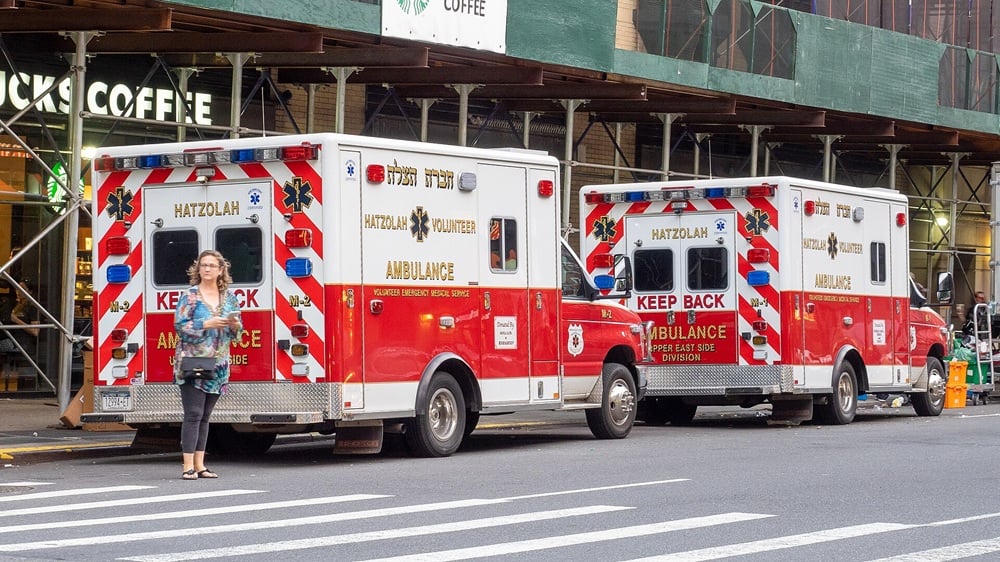
A 32-year-old volunteer medic from Long Island faces federal charges for orchestrating a $36.7 million Ponzi scheme that exploited members of his own Orthodox Jewish community, with prosecutors alleging he funneled the majority of stolen funds into online gambling platforms.
Jason Doni Schlessel was arrested on November 24 on wire fraud and money laundering charges. According to the indictment, Schlessel solicited investments from at least 47 people, including fellow volunteers at Queens Hatzolah, an ambulance service serving the Orthodox Jewish community in New York. He promised guaranteed returns of up to 30 percent within two weeks, claiming he had lucrative deals to import and resell personal protective equipment (PPE) including masks, face shields, surgical goggles, and protective gowns.
Prosecutors allege the shipments, suppliers, and customers never existed. To perpetuate the scheme, Schlessel fabricated invoices, purchase orders, and doctored bank statements to present a facade of financial legitimacy. Between May 2020 and April 2022, he allegedly used approximately $28.5 million to repay earlier investors in classic Ponzi fashion, temporarily sustaining the illusion before the scheme collapsed.
The gambling connection emerged through banking records. On December 6, 2021, the same day one investor wired Schlessel $30,000, prosecutors allege he transferred $150,000 to an unidentified Pennsylvania-based gambling operator. Across the scheme's lifespan, more than $26 million of investor funds allegedly flowed to online casinos and sportsbooks, with prosecutors claiming gambling losses alone totaled around $4.7 million. An additional $3.5 million was misappropriated for personal expenses.
One victim, New York restaurateur Robert Mozorosky, reportedly was owed $10.2 million by January 2022, illustrating the substantial individual losses involved. Mozorosky has been attempting to recover his investment for nearly five years, according to court records.
Schlesssel was released on a $100,000 bond, with Magistrate Judge Clay H. Kaminsky imposing a condition explicitly prohibiting any gambling activity - an acknowledgment by the court of the defendant's demonstrated compulsion to place bets even while simultaneously defrauding investors.
The case exemplifies how problem gambling can escalate from personal financial distress into large-scale fraud targeting vulnerable communities. The targeting of a tight-knit community and the exploitation of trust relationships within it compound the crime's severity. Schlessel faces up to 20 years on the wire fraud charge and up to 10 years on each of three money laundering counts if convicted.
This case reinforces persistent vulnerabilities in the online gambling ecosystem. Despite licensing requirements and regulatory frameworks in various jurisdictions, online operators continue facilitating transactions by high-risk gamblers actively engaged in financial crimes. The Pennsylvania-based operator that allegedly received $150,000 on a single day raises questions about anti-money laundering and know-your-customer protocols at smaller or less-regulated platforms.
Source
Casino.orgRelated stories

Japanese Judge Impeached for Online Gambling and Embezzlement

Star Entertainment Makes First A$260M Fine Payment After AML Failures
Two Belizean Police Officers Charged in Armed Robbery of Casino Winner
Texas Financial Advisor Admits to $1.46M Casino Fraud Targeting Elderly Investors
More on CasinoAdvisor