

Based on reporting by Casino.org →
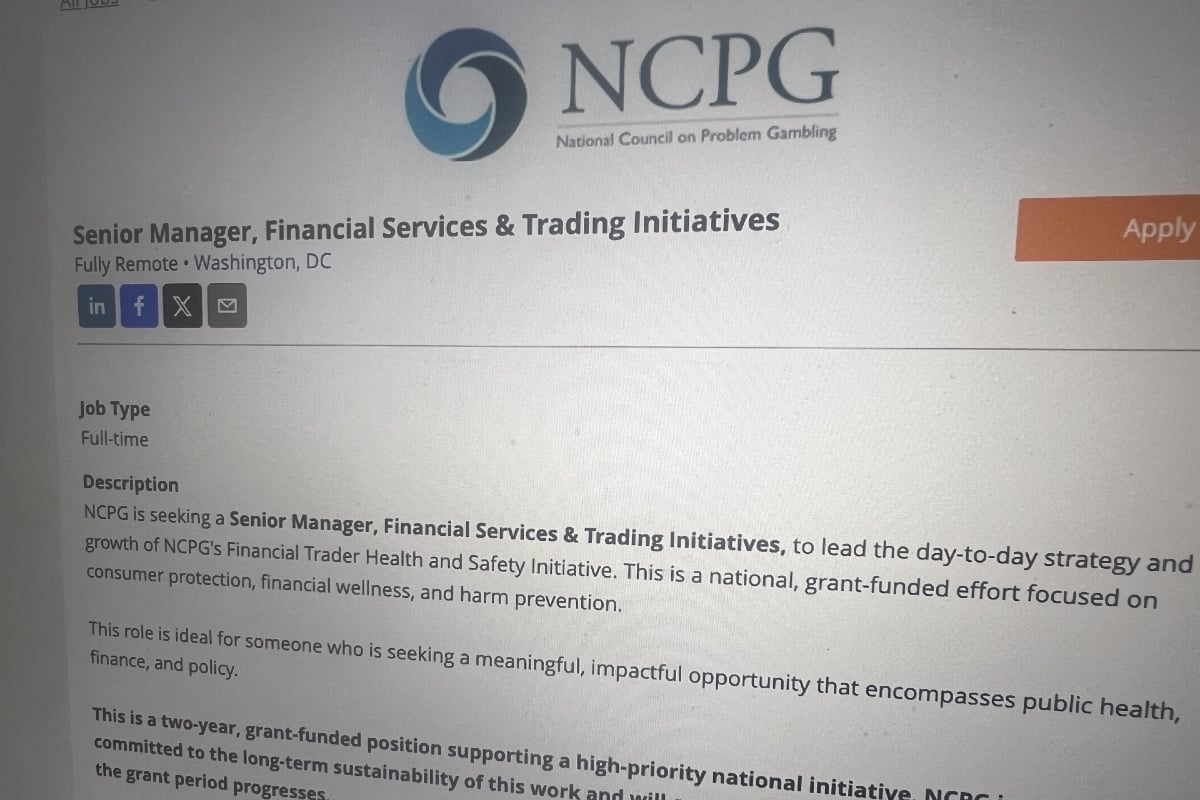
The National Council on Problem Gambling (NCPG) is doubling down on its defense of a prediction markets membership subcategory that has become a flashpoint for questions about nonprofit independence and regulatory capture. The organization launched the Financial Services & Trading membership category earlier this year alongside a $2 million industry contribution, a move that prompted immediate backlash from state gaming authorities and raised concerns about potential conflicts of interest.
NCPG Board President Derek Longmeier argued Tuesday that regardless of how prediction markets are legally classified, the organization views them as functionally equivalent to gambling. 'NCPG believes it is functionally gambling and can expose consumers to many of the same risks and harms associated with traditional gambling,' Longmeier said. He emphasized that the NCPG's mission transcends regulatory definitions, stating that the organization has spent more than 50 years addressing gambling-related harm independent of legal labels.
Longmeier also pointed to a Harris Poll commissioned by the NCPG in June that found 85 percent of Americans believe people can develop unhealthy or addictive behaviors on prediction market platforms, with 84 percent supporting regulatory treatment of prediction markets as gambling with comparable consumer protections. These findings underscore public concern about the nascent sector, which has expanded dramatically since prediction market operators introduced sports-event contracts late in 2025.
However, the NCPG's position has created significant organizational strain. Three state gaming regulators have already severed ties: the Michigan Gaming Control Board, Ohio Casino Control Commission, and Nevada Council on Problem Gambling. Several additional members are reportedly reviewing whether to renew their memberships, signaling broader dissatisfaction with the nonprofit's direction.
The central tension reflects a deeper debate in the gambling industry about how to classify prediction markets. The Commodity Futures Trading Commission (CFTC) and prediction market operators argue that trading on these platforms constitutes financial investing rather than gambling. The largest U.S.-based prediction market joined the NCPG as a Platinum Member in May, effectively making a $2 million commitment to the organization's new initiatives. The NCPG has maintained that it neither supports nor opposes legalization of prediction markets and that member and donor contributions do not influence its research, advocacy, or positions.
Longmeier acknowledged the ongoing criticism but framed the prediction markets membership category as a necessary response to genuine consumer harms. He noted that exposure to prediction markets today occurs 'in scale, in speed, and in reach to new and often young users' at unprecedented levels. The NCPG is committed to prevention and harm reduction 'wherever it occurs,' the board chair concluded, implicitly rejecting the notion that regulatory classification should determine the organization's engagement.
The situation reflects broader tensions within the American gambling regulation ecosystem as emerging financial instruments blur traditional lines between investment and gambling. Whether the NCPG can retain sufficient stakeholder confidence while maintaining its stated independence from the prediction markets industry remains an open question.
Source
Casino.orgRelated stories
CFTC Warns Prediction Markets on Manipulation Risks of 'Mention Markets'
Gibraltar Gambling Chief Defends Sector Resilience Despite Industry Layoffs

Curaçao Regulator Breach Exposes Murky Ownership Behind Hundreds of Licensed Casinos
CFTC Pursues Crypto Market Rules Through Administrative Process After Legislative Setback
More on CasinoAdvisor