


Based on reporting by GamblingNews →
MGM Resorts delivered solid financial results for the second quarter of 2026, reporting consolidated revenue of $4.5 billion, a 1 percent year-on-year increase, as the company navigated a period marked by a potential takeover bid from Barry Diller's People Inc. The results reflect divergent performance across the operator's portfolio, with digital and Las Vegas Strip operations offsetting weakness in regional casinos and mixed outcomes in Macau.
The MGM Digital division emerged as the primary growth engine, with revenue jumping 20 percent to $196 million. The division, which includes LeoVegas but excludes BetMGM (which reports separately), demonstrated the company's commitment to expanding its online presence. However, the segment's adjusted EBITDAR loss widened from $26 million to $31 million, highlighting the ongoing challenge of achieving profitability in the competitive digital gaming market despite strong top-line growth.
Las Vegas Strip Resorts, MGM's flagship segment, reinforced its critical importance to the company's financial performance. Revenue in this segment climbed 3 percent to $2.2 billion, driven by stronger hotel occupancy rates, higher average room rates, and improved casino and entertainment performance across major properties. This marks the second consecutive quarter of year-on-year growth for the segment, signaling resilience in the Las Vegas market even as broader regional operations struggled.
Regional Operations revenue declined 4 percent to $924 million, reflecting weaker casino revenue that only partially offset gains in non-gaming revenue streams. In Macau, MGM China generated flat year-on-year revenue of $1.1 billion, though adjusted EBITDAR fell sharply by 15 percent to $257 million, suggesting margin pressure in the company's Asian operations despite stable top-line figures.
At the consolidated level, casino revenue increased 2 percent to $2.38 billion, while rooms revenue declined 1 percent to $849.1 million. Food and beverage revenue rose 3 percent to $802.3 million, though entertainment, retail, and other operations revenue declined 5 percent to $416.3 million. Operating costs fell 1 percent, enabling operating profit to surge 24 percent year-on-year to $503.6 million. Non-operating expenses declined 67 percent, driving pre-tax profit to $413.5 million, up 209 percent from the prior year. After taxes, MGM reported net profit of $322.8 million, a 173 percent increase from Q2 2025, with net profit attributable to MGM reaching $292.4 million, representing a 497 percent increase year-on-year.
MGM CEO Bill Hornbuckle attributed the results to the strength of the company's diversified portfolio while providing an update on MGM Osaka in Japan. The integrated resort project remains on schedule to open in 2030, with over 60 percent of foundation piles completed and structural work progressing as planned.
The results demonstrate that large-scale casino operators with diverse geographic and business-line exposure continue to generate strong returns, particularly when Las Vegas and digital segments perform well. However, the widening losses in MGM Digital and weakness in regional and Asian operations illustrate the ongoing bifurcation of the casino industry between high-performing flagship markets and challenged secondary operations.
Source
GamblingNewsRelated stories

DraftKings Positioned to Generate $57M in NFL Prediction Market Fees This Season
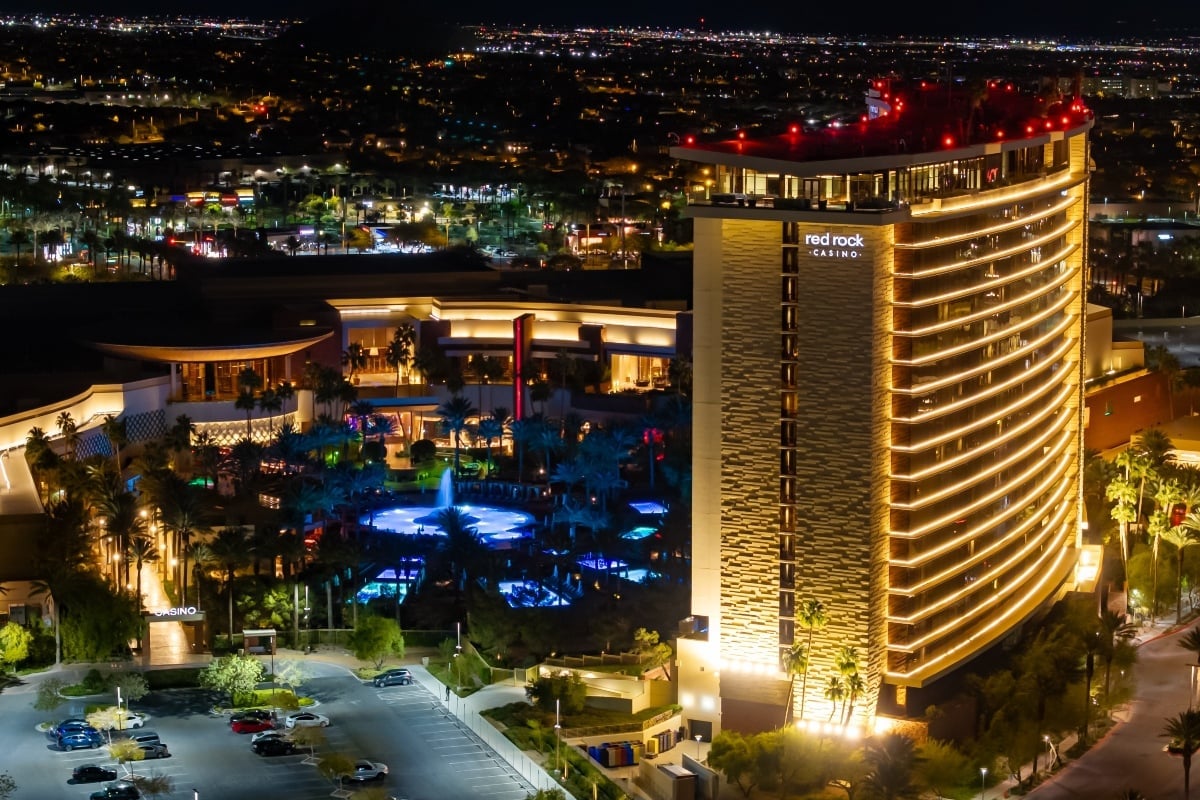
Red Rock Resorts Stock Gains Analyst Support Amid Construction-Driven Headwinds

Wynn Resorts Issues $900M Bond Sale to Refinance Las Vegas Debt Maturity

Playtech Posts 77% EBITDA Growth on Hard Rock Digital Momentum in North America
More on CasinoAdvisor