

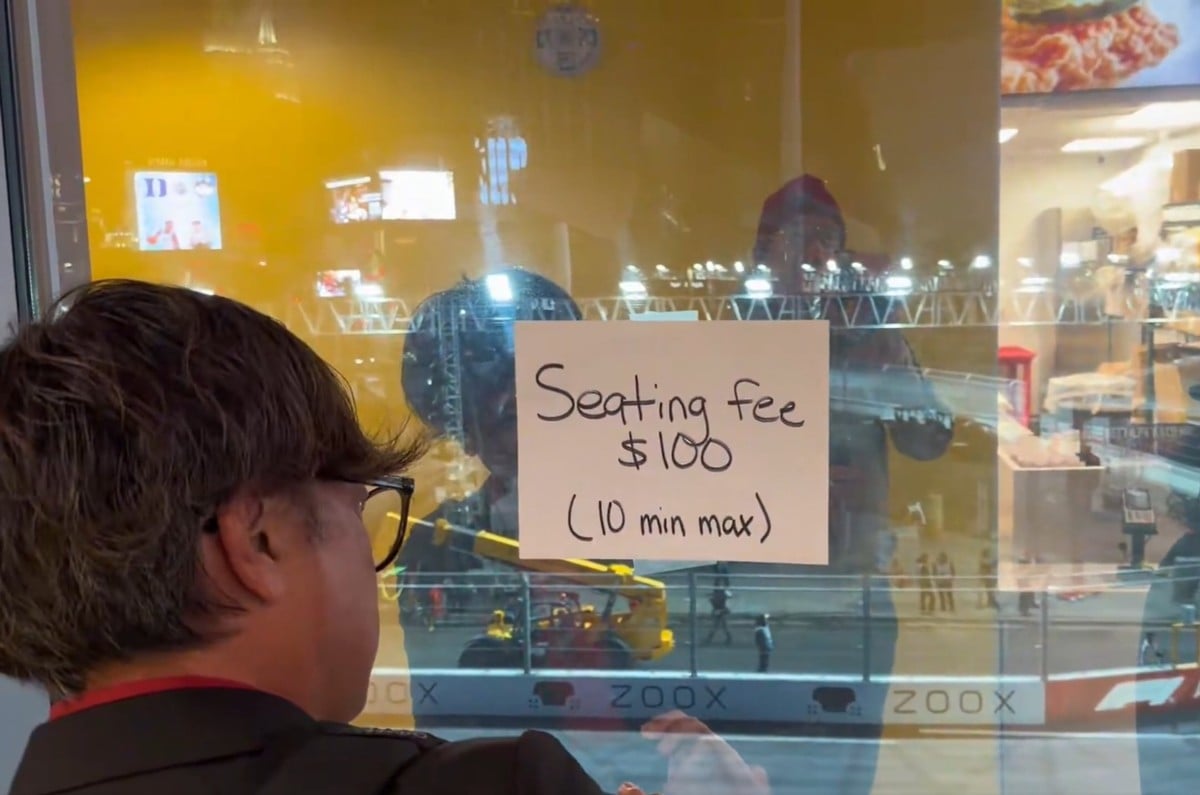
A Bojangles restaurant on the Linq Promenade drew criticism this month after charging Formula 1 spectators $100 for 10-minute seating during the Las Vegas Grand Prix. Social media posts, which garnered over 717,000 views, showed signage reading 'SEATING FEE $100: 10 min max' posted inside the venue. A second video documented an employee threatening to call police on customers who exceeded their allotted viewing time.
The newly opened location, which debuted on October 7, 2026, was the first Bojangles in the U.S. with a full-service bar and offered a direct view of the race circuit running through Las Vegas Boulevard. While the incident drew accusations of a 'scam' from industry observers, legal experts note that businesses operating on private property can impose cover charges, minimum purchases, or seating fees, provided customers are informed in advance. Similar practices exist at other Las Vegas establishments, including the Eiffel Tower at Paris and Top of the World at Strat, which charge premiums for Strip-view tables.
Interestingly, Bojangles' per-minute rate was mathematically competitive with official race attendance costs. The average Las Vegas Grand Prix ticket resold for $781 this year according to TickPick, which translates to approximately $9 per minute across the race's 87-minute duration. Bojangles charged roughly $10 per minute, suggesting the fee structure, while aggressive, reflected actual market demand for premium sightlines during the event.
The incident underscores broader tensions that have accompanied Formula 1's Las Vegas presence since the event debuted in 2023. Prior to that inaugural race, F1 reportedly demanded $1,500 per head in licensing rights from any restaurant or nightclub seeking to host viewing events, with threats to obstruct sightlines using barricades, stands, and light stanchions for non-compliant venues. This would have totaled $3 million for venues with 2,000-person capacity. By August 2023, reports indicated F1 had reduced the licensing fee to approximately $50,000 per venue.
Security measures surrounding the event have also grown extensive. Pedestrian bridges offer obstructed views by design, and security personnel actively deter spectators from using Strip escalators in continuous loops to access free viewing vantage points. These restrictions reflect F1's efforts to monetize sightlines and control the fan experience throughout the Las Vegas corridor.
Neither Bojangles corporate nor the specific Las Vegas location has responded to inquiries about whether the seating fee represented official company policy or an unauthorized scheme by individual staff members. The handwritten signage suggests possible ad-hoc implementation, though no evidence has emerged of improper employee enrichment.
This episode highlights the collision between major sporting events and hospitality venue operations. The practice of monetizing event-related sightlines is legal when properly disclosed, yet generates consumer friction, particularly when implementation appears sudden or aggressive. For the broader casino and hospitality industry along the Las Vegas Strip, it illustrates both the revenue opportunity and reputational risk inherent in event-tied premium pricing strategies. As major sporting properties continue demanding licensing fees and sightline protections, venues face mounting pressure to recover costs through customer-facing charges that must be carefully managed to avoid brand damage.
Source
Casino.orgRelated stories
DraftKings and BetMGM Eyed as Potential Pack Rips Acquirers as Sector Hits $2B

Betty Enters Women's Sports Marketing with PWHL Partnership Deal
Atlantic City Investor Norcross Eyes Non-Gaming Draw to Revitalize Boardwalk
Fontainebleau Taps Margaritaville Brand to Revamp Florida Slots Venue
More on CasinoAdvisor